on friction, and the best and worst in all things

Hello, readers.

sisyphus_charcoal_concept_sketch01It’s hard to get started, and once you get going, it’s hard to stop. This is as true of writing, beginning an excercise regimen,1, or collecting bulk metadata. Also pushing a really big rock up a hill. But, anyway, enough of Sisyphus.

Here’s some food for thought in the form of a thought about friction which, strictly speaking, you can’t eat and so I’m not entirely sure why we metaphor our thoughts, or minds, as things with teeth. Though, well, I do like the image.2

Ben Thompson, writer of the Stratechery blog, wrote about his idea of FRICTION, or, more specifically, the current decline of it in so many areas of life. Mostly brought about by The Internet.

The Internet being a force for change on the scale of The Industrial Revolution, what rolled out changes over centuries and also war and trouble and people having hot water and cars and stuff.

His focus, in the article:

(1) How a frictionless Apple App Store actully makes it hard for developers to develop sustainable business because, whereas, at one time, it was really hard to get your product out there and so only a few did and those few garnered the bulk of the attention of consumers, now, the barrier to entry being low, there’s so much more competition that it’s harder for any app to stand out.

(2) How, while the bulk collection of meta-data may not be an entirely new tool in the law enforcement toolbox, the frictionless ease of such data collection brought about by moore’s law and ubiquitous cell networks has so increased the scale of such activities that it is worrisome.

(3) How the occasionally frictionlessness of the contemporary job market, allows some lucky folk, like Ben Thompson, to pick up and leave their home and work from anywhere, at the same time it allows some less lucky folk to be left unemployed at home as their employer, and their job, picks up and goes elsewhere.

Ben’s conclusion resonated with my paradoxical heart which, generally and simultaneously, sees the best and worst in all things.

Count me with those who believe the Internet is on par with the industrial revolution, the full impact of which stretched over centuries. And it wasn’t all good. Like today, the industrial revolution included a period of time that saw many lose their jobs and a massive surge in inequality. It also lifted millions of others out of sustenance farming. Then again, it also propagated slavery, particularly in North America. The industrial revolution led to new monetary systems, and it created robber barons. Modern democracies sprouted from the industrial revolution, and so did fascism and communism. The quality of life of millions and millions was unimaginably improved, and millions and millions died in two unimaginably terrible wars.

Change is guaranteed, but the type of change is not; never is that more true than today. See, friction makes everything harder, both the good we can do, but also the unimaginably terrible. In our zeal to reduce friction and our eagerness to celebrate the good, we ought not lose sight of the potential bad.

We are creating the future, and “better” does not win by default.

True facts.

Happy Wednesday, readers.

ttfn.
  1. As, I suppose, the lady in the gym today might attest that I am []
  2. MY, GOODNESS GRANDMA BRAIN, WHAT BIG TEETH YOU HAVE []

on mad max and my possibly mad mom

Hello, readers.

Welcome to another week. This one’s way better than last week which was so three minutes ago.

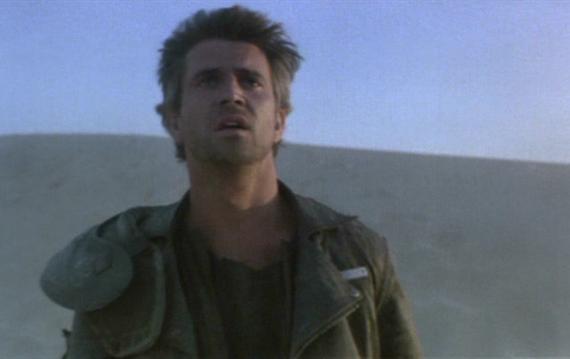
Before that, when I was a kid, my mom introduced me to Mad Max, a dusty trilogy of post-apocalyptic westerns. I don’t remember the how’s, or the why, I just remember my mom had a crush on Mel Gibson and would often shake her head at the oddity of a woman seemingly so gentle, and against violence, finding such joy in films that carved bone from flesh.

Guess I’m just crazy, she said, and she was, and that could be quite frustrating, at times, but in her love of certain things I think her presumed insanity was really just a cover for enjoying things that, perhaps, she wasn’t supposed to enjoy.

3698.0.570.359

But, here’s the thing with those Mad Max films. They were not a mindless celebration of violence, so much as a celebration of the fight, and, in fact, the very fast running away to avoid fighting. There was, amidst the so-called psychopathic violence, some bit of soul, some moral compass, to those films. The world was a scorched, weary, violent place, and here was this man, made mad by the loss of those he loved to a world grown increasingly more violent, who was left just trying to survive.

I think my mom found something, whether she knew it or not, in the story of a man with the weight of a lost world on his shoulders, carving a lonely path, the weight of his past holding him back even as it pushed him forward.

I think she loved the love Max sought, and sometimes discovered, in the wake of having lost everything.

That was, at least, part of Mom. She could be gentle, and she could be mad, and it did very much seem like, from time to time, the weight of some lost world would visit her shoulders.

Later this week, I’ll be seeing Mad Max: Fury Road. I’m so excited and so full of thoughts of Mom and what she would make of a Max not played by Mel. I think, considering what people are saying, she would have loved it. I think she would have found its rebellion led by women something to cheer. I think, perhaps, she might have developed a crush on Tom Hardy, or, who knows, Charlize Theron. We’ll see.

Here’s something A.O. Scott said of this most recent version of Max.

Even in the most chaotic fights and collisions, everything makes sense. This is not a matter of realism — come on, now — but of imaginative discipline. And Mr. Miller demonstrates that great action filmmaking is not only a matter of physics but of ethics as well. There is cause and effect; there are choices and consequences.

This captures, a bit, of what maybe Mom, and certainly I, have grown to appreciate in Miller’s post-apocalypse.

The weight of things.

Of the past, of action, of consequence.

It’s a mistake a lot of action movies make, allowing their pace, and their explosions, and their BAM/POW to escape gravity when really it’s the gravity of things that holds it, and us, all together.

Happy Tuesday, readers.

ttfn.

embarrassingly lonely people. also flying. also falling.

Hello, readers.

Friday, being today, the day I finished Jimmy Corrigan, seems to be as good a day as any to think about loneliness and embarrassment. So, that is what I’m doing. They will very probably most likely feature in my next video blog. Things which might not feature in that video blog include:

1) Thinking of my father in the hospital and fainting upon seeing him in recovery.

2) Crying in the lap of a woman who was, at the time, the most important person to me in the world which was a weird thing to think about considering parents and, in particular, my dad having undergone surgery. Love does all kinds of wonderful-true-make-believe horror to reality.

3) Watching Parenthood with EG last night and feeling crushed by the thought of parents alone in their houses, knowing that’s how they must have felt, the parents, when their kids left and were, perhaps, sometimes alone in their new houses.

4) How much we long to connect to the loneliness in others and, in that connection, feel for some hope of the lifting of that loneliness, a feeling like flying together, rather than falling alone.

Actually, in fact, that last bit might make it into the video blog. And the others, will, perhaps, make their way in others or that video and, of course, make their way into everything I write, past, present, or future.

The thing about stories is how much they know about the past and future and a little bit of the present. If you want your future told, read a story and let it dream your future for you.

Something like that, readers.

Go read what Jonathan Lethem has to say. He’s smart.

I stitched together a notion: I’d be the American Calvino, but nourished by scruffy genre roots. As though this would comprise a movement or school of writing to contextualize lonely me. It just didn’t exist, that was the only problem. There was nothing there. I could declare it, and a few people would be gulled and say, Oh, you’re going to be that thing!— but only because I’d just described it with such energy and affection. But there’s no such thing.

Happy Friday, readers.

ttfn.

you are no longer just you

Hello, readers.

Summer in London has ended. Everything is grey and wet and will probably stay that way forever.

Also.

The Wachowskis Awesome Fun Time Philosophy Show continues with their new Neflix series, Sense8. They’re collaborating with JMS, himself, J. Michael Straczynski, whose name I always have to look up and also he introduced me, before Whedon, even, to internet discussion of televison.


Bae Doona!
Sayeed!

Sense 8 premieres June 5. I’m in.

Also, also.

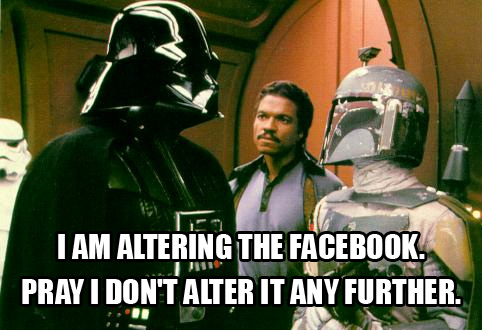
FACEBOOK launched this thing called Instant Articles yesterday which means that sometimes when you click on a New York Times story, for example, you will remain inside of Facebook. DARING FIREBALL described the deal with publishers thusly,

I can see why these news sites are tempted by the offer, but I think they’re going to regret it. It’s like Lando’s deal with Vader in The Empire Strikes Back.

There’s a good rundown of the motivations behind the deal, for Facebook and publishers, at STRATECHERY. He also talks about the economics of advertising on the internet here. It’s surprisingly kind of awesome and interesting and I guess that’s because Ben Thompson write good.

Happy Thursday, readers.

ttfn.

we don’t know we know we don’t know we know

Hello, readers.

Chuck Wendig has written a splendiferous account of how little any of us knows about the fuck that is going on. His focus is on writing. And includes such delightful mountain-based metaphors as this one:

There exists no well-marked, well-lit path up the mountain. You will find no handy map. No crafty app for your smartphone. The terrain shifts after everyone walks upon it. New chasms. Different caves. The ice weasels become hell-bears. The sacred texts we find in the grottos along our journey are sacred to us but heresy to someone else.

It got me thinking about the world’s, and my own, continuing obsession with data. Perhaps, brought on by three reasons.

1) I enjoy paying attention. Collecting data is one way of paying attention. One of my early heroes in the world of data was Benjamin Franklin who, as I’ve probably mentioned before, really loved schedules and diaries (which, for the Brits, is really the same thing, but, well). I wrote a thing about him for Strange Horizons many years ago called, “Imagining the Perfect Man…” which sort of leads me to believe that if he were alive today he’d be like that guy who early adopted cyborgness and have day fully calendared, his nutrition fully planned and documented, and his life, in general, fully scoped.

2) There’s also my EG’s well into data and the visualisation thereof, and so I started reading more about the business of data.

3) For some time, some time ago, I used an app, Human, to track my daily activity: the length of my moving about, the calories burned, the distance traveled. I wanted to know more about me because it seemed cool, and everyone was doing it, and also I thought, while I have always enjoyed going for walks, maybe it would help me make sure I walked enough, whatever enough walking might be. Perhaps, also, I just wanted a record of when and how and where I walked because it was fun to see my walks mapped out. It was, also, honestly, a bit creepy. I wondered, sometimes, what the humans at Human did with all that they knew about me and my fellow lower-case h humans besides create beautiful visualizations from their data-ing of us. They do a very cool thing in allowing you to see your raw data if you are so inclined.

Sometimes I’m pretty sure that no amount of knowledge will save us from ourselves. Sometimes, I think, that we will lose ourselves in the stream of data. That knowing ourselves in purely numerical terms may, in the end, blind us to some other kind of knowledge. That maybe knowing too much about some things about ourselves might erase who we are.

But, then again, I’m all about consciousness. And data appeals to me because it’s a way of being conscious. I suppose, what I try to remember, to be conscious of, is that there are infinite ways to be conscious, and it doesn’t do one any good to become too attached to any one way of knowing yourself, or the world. Because, as the man says, we don’t know what we’re doing. But, we’re trying.

easier, not better. also happiness headbands.

Hello, readers.

We often confuse easier/cheaper/faster with better. We often confuse hard/expensive/slow with better, as well. We are, generally, confused about how to better. Happily, very soon, we will all be capable of wearing headbands that will let us know when we’re happy and that should take care of that.

Here are some good things to read.

The Bad Economics of Bad Coffee

But you get my point. For just the cost of the Keurig machine itself, you could have a cup of really good coffee every weekday morning for a year (260 days) and still have 46 cups leftover. Or, if you bought Seattle’s Best Coffee for about $6/bag, you could make over 440 cups of coffee, and you’d be even better off.

I was an undercover Uber driver

With the lower fares, drivers need to drive more to make the same amount. Anybody at any job would be pissed if their boss declared that they would now be working longer hours for no extra money. But for Uber drivers, who bear the entire cost of maintaining the cars, more driving also means more expenses.

This is often overlooked, because driving a car you own feels like it has no cost. But it’s not free — there’s gas, but also the less visible cost of just owning a car and driving it to death. I’m surprised to find, after running the numbers (you can check my math online), that the cost of driving my car for Uber came to a surprising 51 cents per paid mile. My expenses and depreciation ate 19 percent of my pay.

What would you pay to be happy?

When the 18th-century philosopher Jeremy Bentham suggested that maximising happiness was the job of government, he inspired a quest to measure happiness that continues today. Until recently, the only effective tool for that – as the political scientist Will Davies explains in a forceful new book, The Happiness Industry – has been money. The value of an object is determined by how much people are prepared to pay for it. The unpleasantness of a job – grave-digging or rubbish collection – can be measured in how much people need to be paid per hour to do it. Governments use these “happiness-measuring” principles.

When the US courts were trying to assess what the oil companies should pay for the Exxon Valdez tanker disaster, which contaminated a swathe of Alaska, they asked a sample of US households what they would be “willing to pay” for the accident not to have occurred. The answer – an average $31 a household – was used to help calculate Exxon’s ultimate fine. The neo-liberal economists who have driven conservative political philosophy for 50 years like the simplicity of reducing human feeling to monetary considerations. But the method was clumsy when used to measure abstractions such as emotion. However, with the rise of the science of behavioural psychology, another tool came forward. Economists, anthropologists and psychologists joined forces in the 1990s, spurred on by the interest of business and politics.

Sometimes I wonder if the march of history is a march towards convenience and efficiency? And if this march, by definition, might be inhuman? A march towards our own obsolescence, to humans doing as little as possible, but then I think, no, that’s just confused thought, because the same march that takes us to doing less in some areas tends to take us to doing more in others, such as travel through space. Space travel not being terribly possible if one is spending most of their time attempting not to die from the bitter winter wind.

Happy Tuesday, readers.

Spend your attention with care.

ttfn.

the possibilities of possibly

Hello, readers.

It’s Friday. One of my favorite things about Friday is when the Shirley Jackson Award nominees are announced and those nominees include friends and internet people I occasionally interact with and who are friends of friends. This occurrence, alas, doesn’t occur as often as I like.

Congratulations to everyone. It looks a magnificent feast of terrors well told. I don’t know why I enjoy alliteration so much. It happens.

In particular, I’m excited to see nominated Carmen Maria Machado (a fellow awkward robot) for her novelette, “The Husband Stitch” and to Alyssa Wong, an awesome writer and friend of a friend and internet person I have occasionally interact, for her short story, “The Fisher Queen.” You should go read their stories. And all the other nominees. Because stories.

Also.

David Cameron and his ilk won more than people expected, which means, according to the NYtimes, one of the bigger losers in the UK elections turned out to be pollsters. I imagine pollsters aren’t too worried about their jobs, though. Things seem to work out for ol’ polling, whatever happens. Kid always lands on his feet.

The final result, with the Conservatives securing a majority and projected to win as many as 329 seats, only added to an intensifying debate in the United States, Britain and elsewhere about the accuracy of polling, the problems of getting accurate samples in an era when voters can no longer be reached as easily by traditional means like landline phones and the fracturing of politics making it harder to predict voter behavior.

Everything is possible. The science of determing the nature of possibility fascinates me.

Also. Also.

Google Doodle Honors Nellie Bly, Stunt Journalist Extraordinaire

Today’s Google Doodle honors the 151st birthday of Nellie Bly, a woman who proved that stunt journalism isn’t always a bad thing. The remarkable Bly (whose real name was Elizabeth Jane Cochran) embodied gumption—she famously traveled the world in 72 days, for instance. But her most noteworthy work focused on the lives of the poor and disenfranchised in late 19th-century New York City.

The animated Google Doodle is accompanied by an original song from Karen O, titled “Oh Nellie.” Karen O sings, “We gotta speak up for the ones who been told to shut up/ Oh Nellie, take us all around the world and break those rules ’cause you’re our girl.”

The song’s first line—“Someone’s got to stand up and tell them what a girl is good for”—nods to the way Bly got her start. Her first writing gig, with the Pittsburgh Dispatch, came after she sent an angry response to a columnist who wrote a piece titled “What Girls Are Good For” about the need for women to stay at home.

A cool story that demonstrates how the world has always been horrible. And that it’s always had people trying to make it better.

Happy Friday, readers.


ttfn.


it’s not magnolia

Hello, readers.

It’s Wednesday. It’s occasionally rainy with patches of it will rain again in a minute just you wait. I’ve taken a deep dive into Haruki Murakami’s Colorless Tsukuru Tazaki and His Years of Pilgrimage. It is, as most of Murakami’s books, both mundane and exceedingly weird. A man loses contact with friends. He meets a man who tells a story about his dad meeting a man who knows he’s going to die and tells a story about how when you know that you’re going to die you can see the true colors of a person’s heart.

Also.

Joss Whedon is still talking about Avengers.

…it’s not Magnolia, where you’re telling all these separate stories that are just vaguely intertwined. They’re doing some of that job for me. By the way, if it was Magnolia, it would be the best movie ever made, but I can’t reach for the stars, people. I’m just a man.

Also, also, and on the same topic.

Salon’s Andrew O’Hehir

Even Joss Whedon, an undoubted pop-culture genius, cannot create that kind of significance from whole cloth, at least not after two dozen or more generally similar superhero movies have worn out the cultural resonance of the form. It would be foolish for me to sit here in a tweed jacket with leather patches on the elbows and proclaim that the era of the comic-book movie is coming to an end. That’s not happening anytime soon (and anyway I threw that jacket away). It might be accurate to say instead that superhero cinema has reached a decadent plateau, a long-term steady state of self-nourishing bigness and reverberant meaninglessness. Whedon moves on from the Marvel empire not as its Augustus or its Spartacus, but more like one of the later, non-terrible Christian emperors who won some battles, made some reforms and convinced everybody that the glory of Rome would endure forever. Was it worth doing? That depends on what you think of Rome.

Some of that rings true for me. Except, I don’t think the cultural resonance has worn out of the form. Because the form of superhero films is not anything in particular. Superheroes are a genre in the way that romance is a genre which is to say it’s a genre that can be built on top of any other genre. It’s just going to take a different of superhero story to resonate in the way that Dark Knight did (a superhero noir/crime thriller) or the first X-Men (a superhero coming out)

There will be amazing superhero movies to come, a few of which will take everyone by surprise. And I don’t mean in the way that Guardians of the Galaxy was amazing. But, I mean, in the way that Buffy was amazing. And the first X-men with Bryan Singer was amazing. I mean that someone, somewhere, is going to make a superhero movie that’s personal and has something to say.

I’d bet on an adaptation of a novel written in the aftermath of this superhero renaissance.

Also, also, also.

There’s a bit of blue sky out there, between the clouds.

I’m so excited to see what Whedon does next.


ttfn.

hyperbolic surfaces

Hello, readers.

The Guardian wrote about a collection of Jillian Tamaki called SuperMutant Magic Academy which, by the end of reading the title, you probably know whether you should take a look at it or not and the answer is of course you should in case you were still wondering which I don’t know what to do with you if that’s the case.

In essence, this is a book about raging hormones – think existential crises, black moods, impossible crushes and extreme lethargy – that just happens to come with a little magic on the side. (One character is too lazy to get up off the sofa and grab his wand, for all that he’s longing to use it to conjure up some nachos and guacamole.)

Also.

In the 21st century, only corporations get to own property and we’re their tenants

Also. Also.

I listened to THE GRANDEUR AND LIMITS OF SCIENCE on the walk to The British Library. It’s the episode of On Being wherein Krista Tippet talks to my new favorite person in the world Margaret Wertheim. I’m not sure why I bother to point out that this is my current favorite person in the world as though there are other worlds with other people which might result in my having different favorite people on different worlds and now that I think about it there’s a certain One Direction-al logic to it.

Wertheim writes, and acts, to place the worlds of math and physics in the context of their role in the world of experience (culture, crochet, what have you). She’s published books: Pythagoras’ Trousers: God, Physics, and the Gender Wars and The Pearly Gates of Cyberspace: A History of Space from Dante to the Internet, to name two. She started an institute called the Institute for Figuring, whose acronym (IFF) recalls the logic of if and only if and works to bring the aesthetic dimensions of science and mathematics to people. She gave a TED talk: The beautiful math of coral, about the beauty of coral and hyperbolic space and how that can best be understood through crochet.

About cyberspace.

Well, you know we do so much online. We’re in chat rooms. We’re in video games. I think generations of people bought up experiencing literally a sense of themselves existing or being and acting in a virtual universe. I think that generation will not accept pure materialism. And I think this is the great revolution of the cyber era, of the Internet era. The coming into being of virtual realities is representing that reality is not just matter in motion through physical space. And I think that’s absolutely wonderful.

She said smart things about god.

So what is my beliefs? And I’d like to put it this way: I don’t know that I believe in the existence of God in the Catholic sense. But my favorite book is the Divine Comedy. And at the end of the Divine Comedy, Dante pierces the skin of the universe and comes face to face with the love that moves the sun and the other stars. I believe that there is a love that moves the sun and the other stars. I believe in Dante’s vision. And so, in some sense, perhaps I could be said to believe in God. And I think part of the problem with the concept of, “Are you an atheist or not?” is that our conception of what divinity means has become so trivialized and banal that I think it’s almost impossible to answer the question without dogma.

About particles and waves.

Yes. Physics, for the past century, had this dualistic way of describing the world. One in terms of waves, which is usually conceived of as a continuous phenomena. And one in terms of particles, which is usually conceived of as a discrete or sort of digitized phenomena. And so quantum mechanics gives us the particle, as it were, discrete description. And general relativity gives us the wavelike, continuous description. And general relativity operates at the cosmological scale. And quantum mechanics operates so brilliantly at the subatomic scale. And these two theories don’t currently mathematically mesh. So the great hope of physics for the last 80 or so years has been, “Can we find a unifying framework that will combine general relativity and quantum mechanics into one mathematical synthesis?” And some people believe that that’s what string theory can be. And it’s often — when contemporary physicists write about the world, they talk about this as being a fundamental problem for reality. But it’s not a fundamental problem for reality. It’s a fundamental problem for human beings. The universe is just getting on with it.

One of the things that occurred to me while listening is how this is one of the places I live. In this particle/wave world in which depending on how you ask the question, I might answer in one or another or a third way. And thinking about the word “live” the thing I thought was that I really enjoy traveling between different worlds of thought in the way I enjoy traveling between different countries. Restless in body and mind. Descartes would probably say it that way. But with more words about stuff.

Happy travels, readers.


ttfn.